5 Surprising Truths Hidden in the Ancient Biblical Rhythms
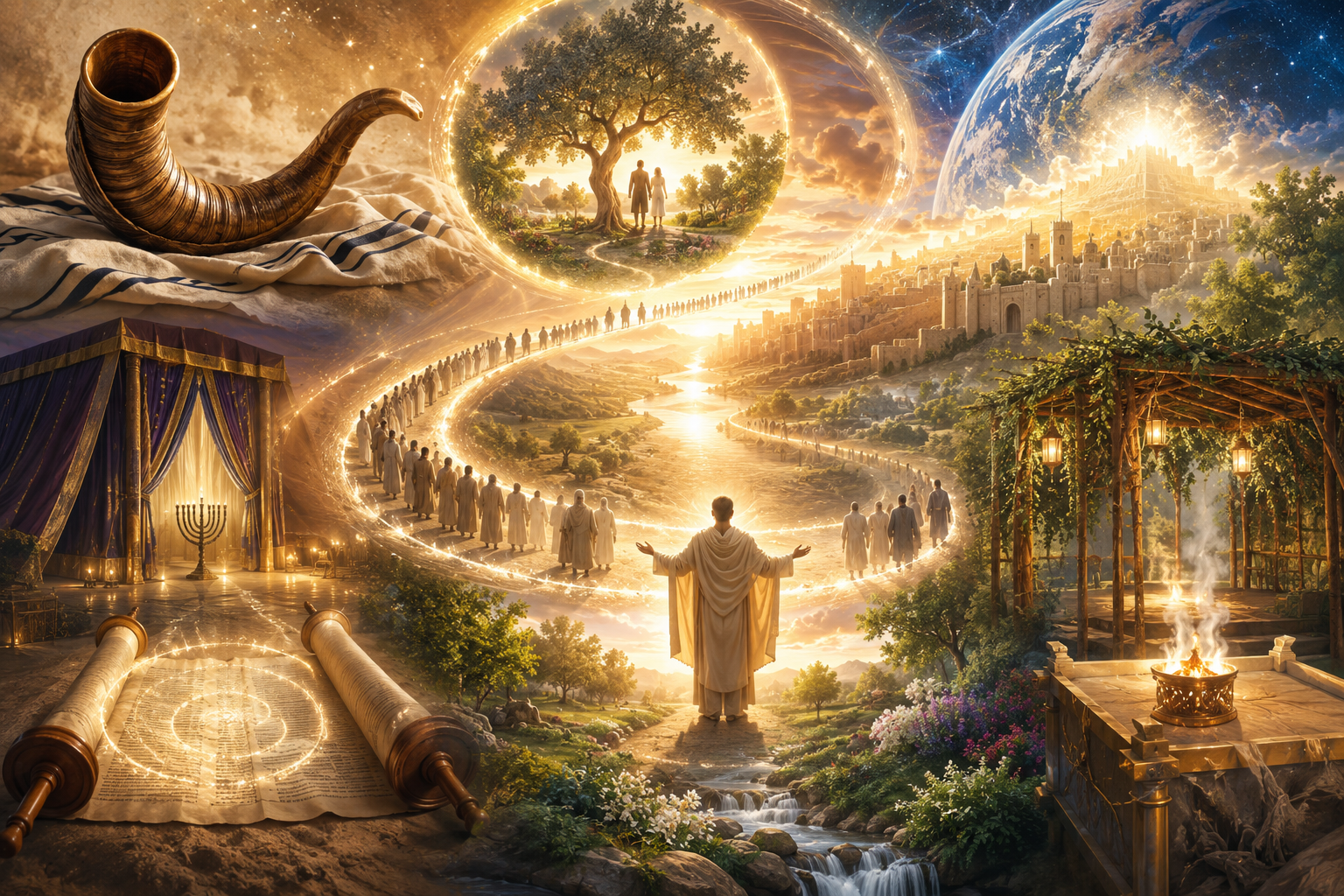
What if the biblical festivals were never meant to be a religious checklist, but a sacred map back to our original home? This article explores the ancient rhythm of the moedim as more than dates on a calendar but also a divine pattern of procession, remembrance, and return that draws us from ordinary time into the presence of God.
For many of us, time feels like a linear grind, not much more than a relentless series of dates on a calendar to be checked off as we move from one task to the next. We often perceive the ancient biblical festivals through this same narrow lens, viewing them as a repetitive list of religious duties or dusty historical commemorations. But what if these rhythms were never meant to be a "to-do" list? What if they are actually a map leading us back to our original home?
In the Hebrew tradition, the word for festival is chag. It is a concept that goes far deeper than a simple holiday; it evokes the imagery of a sacred procession, a people moving together in celebration around the presence of God. When we look closely at these cycles, we discover they are not isolated events, but successive movements of one divine symphony. They are invitations to enter a rhythm that bridges the gap between our world and eternity.
1. The Holiday is Actually a "Dance" (Not Just a Date)
The Sacred Spiral: Why the Biblical Calendar Never Truly Ends
The Hebrew word chag suggests movement, rhythm, and return. While we tend to think of time as a straight line, the biblical calendar is designed as a circle. Each year, the cycle begins with redemption at Passover and journeys toward a climax in the seventh month. Yet, in the wisdom of the Creator, this is not a repetitive circle for the sake of boredom.
It is a "spiral." While the worshipper returns to the same appointed times year after year, the movement is formative. With each revolution, creation is drawn deeper into its final destiny. The circle represents both movement and permanence. This is a fitting symbol for a covenant that remains faithful and unbroken. As we participate in this "dance," we are not merely repeating history; we are advancing toward transformation.
"A circle has both movement and permanence. It possesses direction without a true beginning or ending... It becomes a fitting symbol for covenant itself: faithful, unbroken, and complete."
2. You Are the Shofar
The Instrument of Breath: What the Shofar Reveals About Being Human
When we think of biblical trumpets, we might imagine the polished silver instruments fashioned by human hands. But the shofar, a ram's horn was and is distinct. It is taken from a clean animal and retains its natural form, shaped by the Creator rather than human craftsmanship.
Jewish tradition teaches that the hollow body of the shofar reflects the human body. Left to itself, the horn remains silent and lifeless, incapable of producing even the faintest sound. It only becomes animated when breath passes through it. This imagery mirrors the opening chapters of Genesis: Adam was formed from the dust, but he remained motionless until God breathed the "breath of life" into his nostrils. You are intended to be a living instrument of the Creator's glory, animated by His Ruach (Spirit). Furthermore, the curve of the horn represents a "posture of humility," reminding us that our "joyful sound" is not a product of self-exaltation, but of surrender before the King.
3. Eden Was the First "Holy of Holies"
The Temple as a Memory: Why the Garden Was Our First Sanctuary
The Temple in Jerusalem was not the beginning of God’s story with humanity; it stands much closer to the end. The Garden of Eden was the original sanctuary. Think of it as the first "Holy of Holies" where heaven and earth converged without any barrier or veil. Humanity was not created to visit God’s dwelling; we were created to live within it.
This perspective transforms Adam's identity. He was not just a gardener; he was the first priest. The Hebrew vocabulary used to describe his duties in Eden as "to serve and guard" is the exact same language later used to describe the responsibilities of my ancestors, the Levitical priests. Adam was uniquely fashioned as a "living bridge," created from the dust of the earth yet animated by the breath of God to unite heaven and earth within his vocation. The later Tabernacle, with its woven cherubim and restricted boundaries, was a carefully constructed reminder of the access we lost, something the communion God is determined to restore.
"Humanity was not invited to visit God's dwelling; humanity was created to live within it."
4. Reclaiming Yom Kippur from Fear
A Sabbath of Rest: Why the Most Solemn Day is Actually About Joy
Yom Kippur, the Day of Atonement, is often shrouded in fear. Popular traditions speak of bells and ropes attached to the High Priest, born of an insecurity that he might be struck dead behind the veil. However, the Torah describes this day as a Shabbat Shabbaton or as Sabbath of complete rest. It is the deepest expression of Sabbath, pointing back to the seventh day of creation when everything reached its intended order.
Rather than a day of insecurity, Yom Kippur is a yearly rehearsal of creation restored. The High Priest himself embodied this hope; his garments, clothed in symbols of earth and heaven, reflected a "miniature creation." As he entered the Holy of Holies, he carried the hope that the cosmic rupture opened in Eden might be healed. This day signals that the sanctuary is purified and the covenant bond is renewed, shifting the focus from personal fear to the joyful restoration of the entire created order.
5. The Surprising Direction of Sukkot
Sukkot is About Coming Home (Not Leaving Earth)
The Feast of Tabernacles (Sukkot) is defined by the sukkah, the temporary shelter. While these booths remind us of the wilderness journey, they were never the destination. The holiday moves in sync with the "celestial dance" of the stars as the canopy separating earth from eternity, to reveal a magnificent truth about our future.
Many people expect the end of the story to involve humanity "ascending" away from the earth. But the biblical festivals reveal a surprising direction: the New Jerusalem descends from eternity to earth. Sukkot is the celebration of the "cosmic marriage" where the two become one. The story ends where it began... in a garden-city where God makes His home with His creation. The sukkah was temporary, but it pointed toward a permanent home.
"The movement is exactly the opposite of what many people expect... The story ends where it began, in a garden, with a husband and wife. Creation restored to what it once was."
Conclusion: The Circle Completes
The ancient biblical rhythms are more than religious observances; they are a "dance" that leads us back to the restoration of all things. By entering the chag, we are learning the rhythm of Eternity in the present. We see ourselves as the shofar—lifeless dust until animated by the Divine Breath—and as priests called to serve and guard the sacred intersection of heaven and earth.
History is not a random line of events; it is a purposeful movement toward a home where God and humanity dwell together once again. The "dance" has come full circle, moving from the communion of Eden to the glorious restoration of the New Jerusalem.
THIS BLOG POST IS INSPIRED BY THE FOLLOWING COURSE MATERIAL: As It Is In Eternity. You can find it in the store.